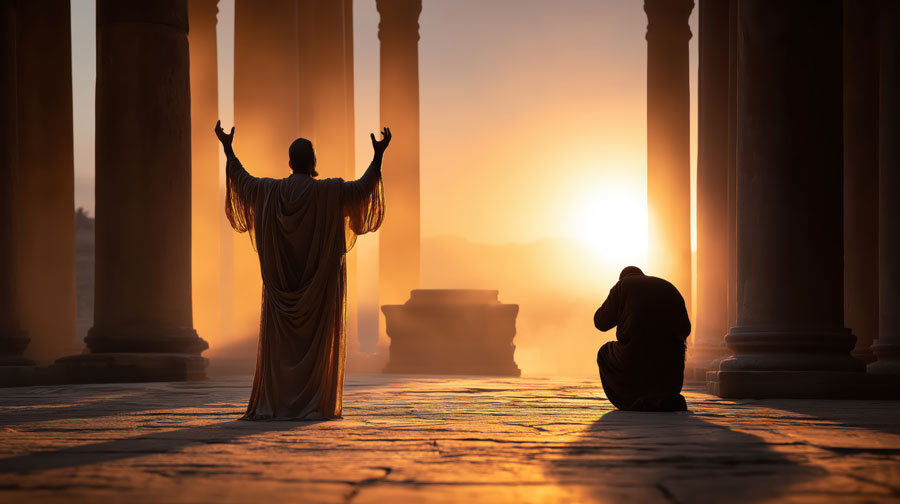
We continue to hear the theme about prayer. This time Jesus tells us about the parable of the Pharisee and the Tax Collector. Two men went up to the temple to pray. One is a Pharisee, and the other is a tax collector. The former is seen standing in the temple. He exhibits a certain degree of haughtiness and arrogance wherein he doesn't need to prostrate before the presence of God. With a sense of superiority, he compares himself with the rest of humanity whom he describes as "greedy, dishonest and adulterous" like this tax collector. Though rightfully he starts his prayers with thanksgiving to God for his blessings received, he goes on to list down his own merits and good works such as fasting twice a week, and paying tithes.
Actually, as the commentary goes on to say, he is not praying to God, but to himself, since all his praises are self-laudatory and a reflection of himself. His whole attitude is contrary to God's ways who never looks down and despises sinners.
On the other hand, the tax collector represents those who do not know the Law, much less observes them. He represents the whole of humanity who are sinners and are in need of God's mercy and compassion and salvation. Pope Francis had pointed out: "The parable teaches us that a man is just or sinful, not because of his social class, but because of his way of relating to God and how he relates to his brothers and sisters. Gestures of repentance and the few brief words of the tax collector bear witness to his awareness of his own miserable condition. His prayer is essential. He acts in humility, certain only that he is a sinner in need of mercy. If the Pharisee asked for nothing because he had already everything, the tax collector can only beg for the mercy of God! Presenting himself with 'empty hands,' with a bare heart acknowledging himself to be a sinner, the tax collector shows us the condition that is necessary to receive the Lord's forgiveness. In the end, he is the one, so despised, who become the icon of a true believer." (General Audience, June 1, 2016)
When we approach God in prayer, we let him examine everything that we are - our thoughts, feelings and actions - in all honesty, sincerity and without hypocrisy. After all, he already knows us everything we have done and failed to do. What he expects of us is a contrite spirit and a humble heart which he would not scorn (Psalm 51:19). To have a contrite spirit means to feel guilty and remorseful of the sins we have done and to seek his forgiveness. Only after confessing our sins before the Lord will he justify us before the Father in the Holy Spirit.
The book of psalms is rich with prayers asking the Lord for forgiveness. Foremost among these prayers is Psalm 51 which was composed by David after he had committed the sin of adultery with murder. This prayer is prayed in the Liturgy of the Hours every Friday morning as a morning prayer. Let us often use it in prayer like the tax collector, striking our breast and not even daring to look up to heaven in humility and compunction.
On the lighter side, let's use this opportunity given to us by the Church to obtain the plenary indulgence as we are about to close the Holy Year. Let us pass through the Holy Doors of our churches in the Diocese mindful of the conditions to obtain it, namely: Having confession, receiving Communion, praying for the intention of the Pope, and doing the spiritual or corporal works of mercy.
— Fr. Jerome