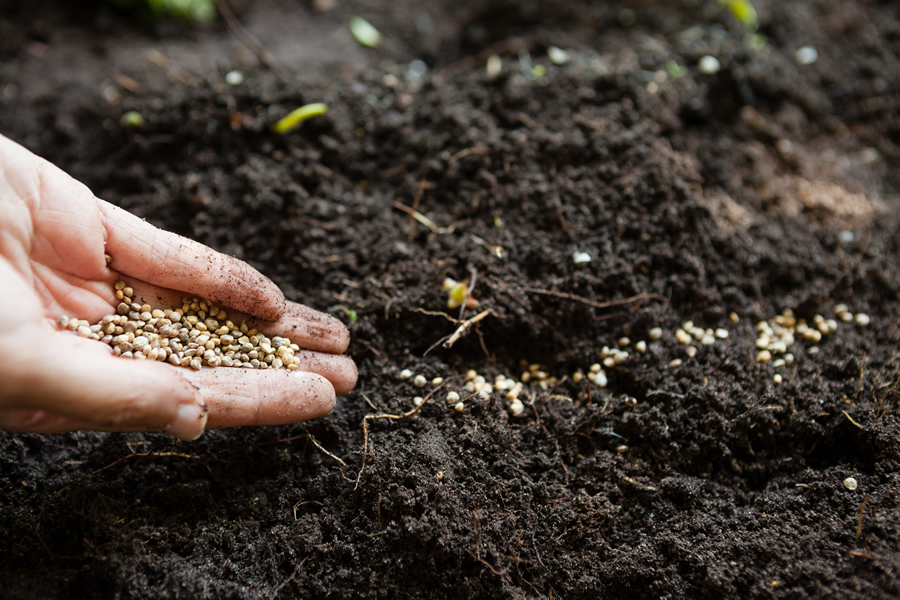
The Sower and the Seed
by Fr. Jerome Cayetano | 07/12/2026 | The WORD in other wordsIf you are familiar with the Gospels, you would notice that they are littered with a lot of parables. This is one of the methods that Jesus uses in order to be understood by his audience, who are mostly ordinary people. People during the time of Jesus do respect the parables because they are easily construed by people. Today we hear a famous parable, the Parable of the Sower.
According to Jesus, a sower went out to sow seed. Some seeds fell on the path, and birds came and ate it up. Some seeds feel on rocky ground, where it had little roots. It sprang up at once because the soil was not deep and when the sun came up, it was scorched, and it withered for lack of roots. Some feel among thorns, and the thorns grew up and choked it. But some seed fell on rich soil, and produced fruit, a hundred or sixty or thirty-fold.
There are many interpretations regarding this parable. The Sower is Jesus. The Seed is the word of God. The path, the rocky ground, the thorny ground, and the rich soil represent the different attitudes of people when they receive the Word of God. There are people who receive the word of God, but they take them for granted. There are people who joyfully receive and welcome the word of God, but the word of God stays for a short while in their hearts because of no deep reflection and study of the word of God. There are people who receive the word of God, but they compromise it with worldly attractions, preferences and attachments. Finally, there are people who receive and welcome the word of God, reflect, study, and live it every day of their lives. The word of God produces goodness, holiness, and uprightness of life.
There are three fundamental attitudes to the word of God; namely: spiritual receptivity, spiritual endurance and spiritual growth and responsibility.
God, who is the sower of the word, expects us to have spiritual receptivity to the word of God. It means that our hearts ought to welcome it with complete openness. We should not take it for granted. The growth of God’s word depends on the degree of receptivity of our hearts. Indifference or coldness to the word will stifle its growth. Complete openness to the word of God will accelerate its growth.
For the word of God to grow in our hearts, we need spiritual endurance, that is, to grapple with our innate weaknesses and limitations. We must struggle against our competitors with the word. They may be the bad influences in our life—our vices and “love for money, popularity and power.”
Finally, for the word of God to be enriched and to help accelerate its growth, we must be responsible for its fruitfulness. Remember, Jesus curses the fig tree because it has no fruit. We need to cultivate the word of God by constant reflection, study, prayer, and reception of the sacraments. People around us should enjoy its fruits by our works of love and charity. Likewise, the fruits of the Spirit ought to be conspicuous in our life, namely: love, joy, peace, kindness, gentleness, humility, patience, purity of heart and self-control. For growth and fruitfulness, we need God’s grace and our complete cooperation with it. Indeed, grace is built in nature.
BACK TO LIST