
"Seek ye first the Kingdom of God and his righteousness"
by Fr. Jerome Cayetano | 08/30/2026 | The WORD in other wordsThe Gospel reading today is the continuation of last Sunday’s Gospel. After Peter’s profession that Jesus is the Son of the Living God. Immediately, he predicts his own passion, death and resurrection. Meaning to say, he is willing and determined to take upon himself the role of the “Suffering Servant” which Isaiah has prophesied many years back.
Continue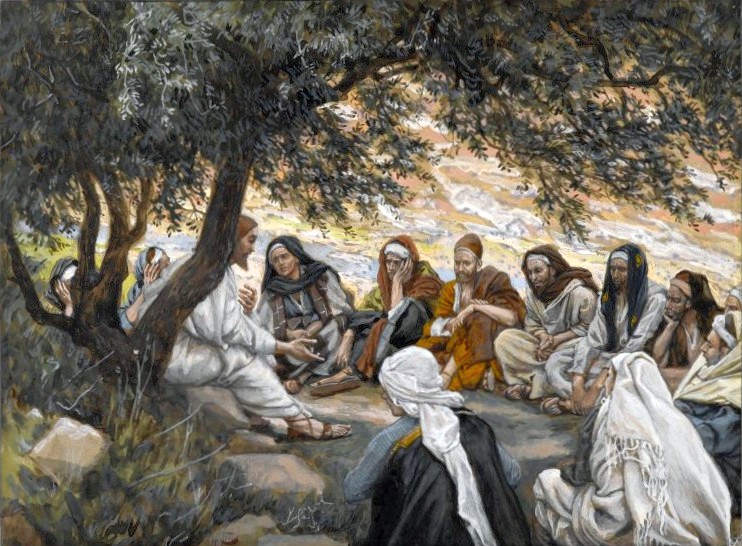
Who do you say that I am?
by Fr. Jerome Cayetano | 08/23/2026 | The WORD in other wordsDid Jesus undergo an identity crisis?
Apparently “Yes” by the fact that he asked this million-dollar question: “Who do the people say the Son of man is?” Many biblical scholars dubbed this as “the Galilean crisis”. It is noteworthy that Jesus asked this question when he and his disciples reached the region of Caesarea Philippi. A region named after two famous personalities of that time, Caesar Augustus, the emperor and Philip, one of the sons of Herod the great. Likewise, it is a Greco-Roman city with altars and statues of pagan deities, most especially the god “Pan”.
Continue
"Have pity on my Lord, son of David!"
by Fr. Jerome Cayetano | 08/16/2026 | The WORD in other wordsFr. Flor McCarthy, SDB, the author of New Sunday and Holy Day Liturgies has this cool story to share with us: “Once a severe winter took place in the Arctic; all but two people in a certain camp died of starvation. The two survivors were an Eskimo woman and her baby. The woman began a desperate search for some means of obtaining food. Eventually she found a small fish hook. It was a simple matter to rig a line, but she has no bait, and no hope of getting any.
Continue
Lord, Save Me
by Fr. Jerome Cayetano | 08/09/2026 | The WORD in other wordsWhere do you turn to when you are beset by difficulties and insurmountable problems? Do you naturally turn to God in prayer? But this seems to be a very selfish and pragmatic approach to God which should not be the case. We have to always turn to God in good and bad times.
Our first reading tells us about Elijah fleeing from the wrath of Queen Jezebel who threatened to kill him after King Ahab told her that he was responsible for the death of two thousand prophets of Baal. Elijah ran away and fled for his life, going from Beersheba to Judah until he came to a broom tree and sat beneath it.
Continue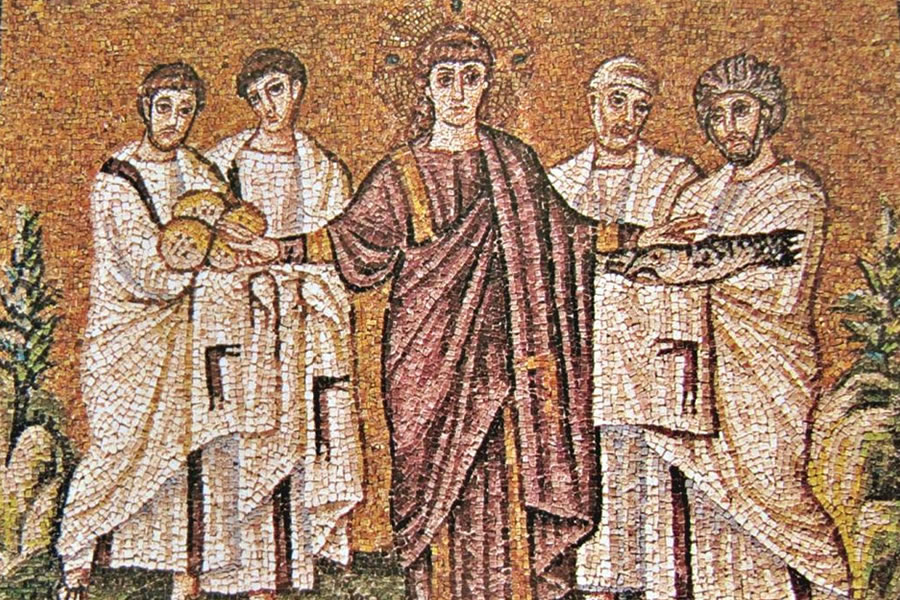
The hand of the Lord feeds us, He answers all our needs
by Fr. Jerome Cayetano | 08/02/2026 | The WORD in other wordsOur Sunday readings today point to one theme, that is, we have a God who is our Father who provides us with abundant blessings and graces because of his profound unconditional love for us. He reassures us that he never abandons us. His presence and care are constant, and he invites us to be an extension, a concrete and tangible expression of his provident love to our brothers and sisters in need.
Continue
You are my treasure, Lord
by Fr. Jerome Cayetano | 07/26/2026 | The WORD in other wordsI have an uncle who is/was obsessed in searching for the infamous “Yamashita treasure.” He spent a lot of money in the process of his search. Until now, he was not successful. Today’s gospel tells us of two parables. A man in search of treasure in field and a man search of the finest pearl. Both were willing to sacrifice everything they had just to obtain the field with treasure and the finest of all pearls.
Continue
The Weeds among the Wheat
by Fr. Jerome Cayetano | 07/19/2026 | The WORD in other wordsPerhaps one of the reasons why Jesus taught in parables is because He wants to uncover the secrets of the Kingdom of God to the ordinary and simple people of His time. And once they get the lesson, they would be able to put it in their lives. Last Sunday, we heard about the parable of the seed. Today’s Sunday pericope or account gives us a colorful parable of the weeds among the wheat.
Continue
The Sower and the Seed
by Fr. Jerome Cayetano | 07/12/2026 | The WORD in other wordsIf you are familiar with the Gospels, you would notice that they are littered with a lot of parables. This is one of the methods that Jesus uses in order to be understood by his audience, who are mostly ordinary people. People during the time of Jesus do respect the parables because they are easily construed by people. Today we hear a famous parable, the Parable of the Sower.
Continue
Rest in Jesus
by Fr. Jerome Cayetano | 07/05/2026 | The WORD in other wordsIn this pericope or Gospel account, we focus on the theme of “rest or being refreshed.” This is what Jesus had promised to those who are laboring for His Kingdom or for His vineyard. Mind you, Jesus had just sent his twelve disciples to the towns and villages where He intended to go. He specifically instructed them to go after the “lost sheep of the house of Israel.” The disciples most of the time were successful, but there were times they were not.
Continue
Lord, I am willing to follow You
by Fr. Jerome Cayetano | 06/28/2026 | The WORD in other wordsAll human relationships from personal to business have one principle that they follow. What is this principle? It is a “give and take” kind of relationship. Does Jesus have the right to demand from us? Of course, He does. He emptied himself to become like us in all things, except sin to show His unconditional love for us. He suffered and had to experience excruciating pain and was crucified and died for our salvation.
Continue
Fear no one.
by Fr. Jerome Cayetano | 06/21/2026 | The WORD in other wordsWe humans have a lot of fears. We fear water, that is, "hydrophobia." We fear of heights, that is, "aerophobia.” We fear of death, that is, "thanaphobia." We fear enclosed spaces, that is, "claustrophobia."
In our Gospel today, Jesus assures the twelve disciples and all of us: "Fear no one. Nothing is concealed, that that will not be revealed, nor secret that will not be known...And do not be afraid of those who kill the body but cannot kill the soul; rather, be afraid of the one who can destroy both body and soul in Gehenna." (Mt 10: 28)
ContinueThe harvest is abundant, but the laborers are few.
by Fr. Jerome Cayetano | 06/14/2026 | The WORD in other wordsOne of the things that I have realized in the Ordinary Season is that we are being asked and invited to focus our attention on Jesus. What is He doing? What are His feelings? What are His attitudes about people? And what are His aspirations for the people?
Jesus is true and faithful to the mission that the Father has given to Him. Prior to this pericope, Jesus, according to Matthew, toured around towns and villages; in other words, he was an itinerant preacher. He proclaimed the good news of God's reign - the conspicuous realty that the reign of God is amongst the people, He cured diseases and sickness and expelled demons.
Continue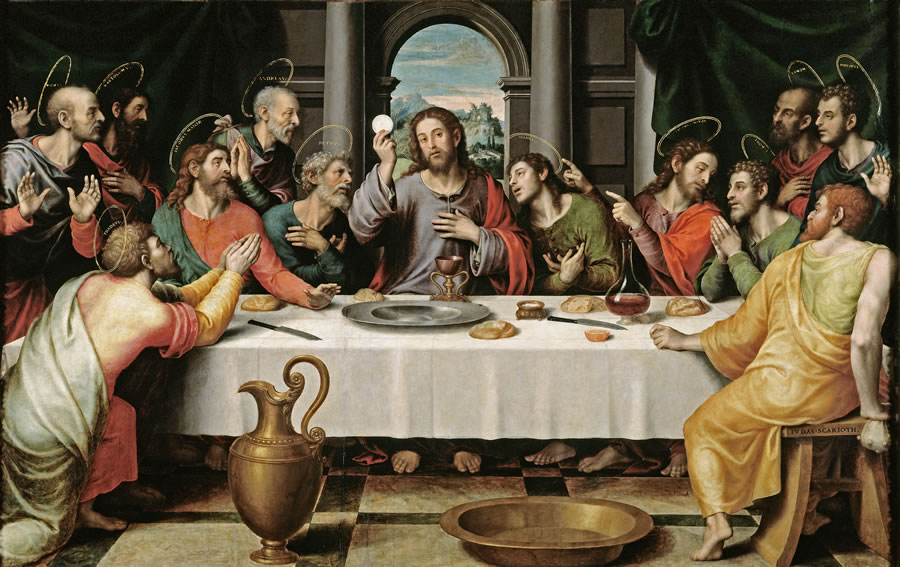
Solemnity of Corpus Christi
by Fr. Jerome Cayetano | 06/07/2026 | The WORD in other wordsFood is an essential element in life in order to survive and to be energized. Jesus understood this when He compares Himself as the "living bread from heaven". He says: "I am the living bread that came down from heaven; whoever eats of this bread will live forever; and the bread I will give is my flesh for the life of the world." The Jews quarreled among themselves because they didn't understand what He was trying to tell them.
Continue